Water damage restoration in Coweta: free on-site assessment, moisture readings and drying from a local Tulsa-area crew. Call or text (918) 550-2555, phones answered 24/7.
Not every leak needs a full restoration crew. Nitro’s assessment is built around one question: what do you actually need?
Coweta's 2020-2030 Comprehensive Plan describes gently rolling terrain cut by drainage ways. Coweta Creek bisects the city and empties into the Arkansas River south of downtown. The plan also notes that low-lying areas create drainage challenges. A house on higher ground and a building near a drainage way should not receive the same assumptions after a downpour.
Tell us whether water collected against the building or appeared inside without any outdoor pooling. We check the indoor wet area and ask about repeated entry during rain. A drying plan deals with affected materials; correcting a grading or drainage problem is a separate issue. We explain that distinction so a temporary dry floor is not mistaken for a resolved source. Learn more about water damage restoration.
On October 10, 2021, an EF1 tornado crossed Coweta neighborhoods and the high school before dissipating south of the Muskogee Turnpike. The NOAA storm record documents damaged homes, school buildings and businesses, along with downed trees and power poles. The date is a useful reminder that storm-related water entry here is not confined to the spring calendar.
When wind damages a roof or window, rain may affect insulation and finishes beyond the visible opening. Do not enter a damaged building until it is safe. We assess the moisture once access is cleared and explain what needs drying. Photographs taken before temporary covering can help show the entry route, while material readings show how far the indoor loss actually extends. Learn more about storm damage.
The Coweta stormwater page explains that dirt, silt and debris can clog storm sewers. For a property with water entry after repeated downpours, the moisture history matters more than whether the room smells fresh today. Mold can become a concern after water damage, but a wet yard alone does not establish a mold problem indoors.
We assess the building and test moisture levels before recommending anything. Tell us if the same baseboard becomes damp after each storm, or if a previously repaired wall has changed again. Those details help separate a one-time loss from an unresolved entry route. We explain the affected materials and any need for further investigation before discussing mold-related work; covering a persistent wet spot is not a substitute for understanding it. Learn more about mold remediation.
Coweta's Fire Department lists community education, prevention, suppression and rescue among its responsibilities, with its station on North Broadway. Those public-safety functions come before any property cleanup. Do not re-enter after an incident until responders say it is safe, and do not assume that an undamaged-looking outlet or ceiling is ready to use.
The water used to put out a fire needs drying too. When reviewing a recovery scope, ask which rooms were checked for moisture and which findings support removal rather than cleaning or drying. A clear explanation should separate wet materials from smoke residue and from repairs that require other qualified trades, so the sequence is understandable before work is approved. Learn more about fire and smoke damage.
Coweta's drainage ways and low areas make the entry route important, and that history helps distinguish runoff from an indoor leak.

How we explain a scope.
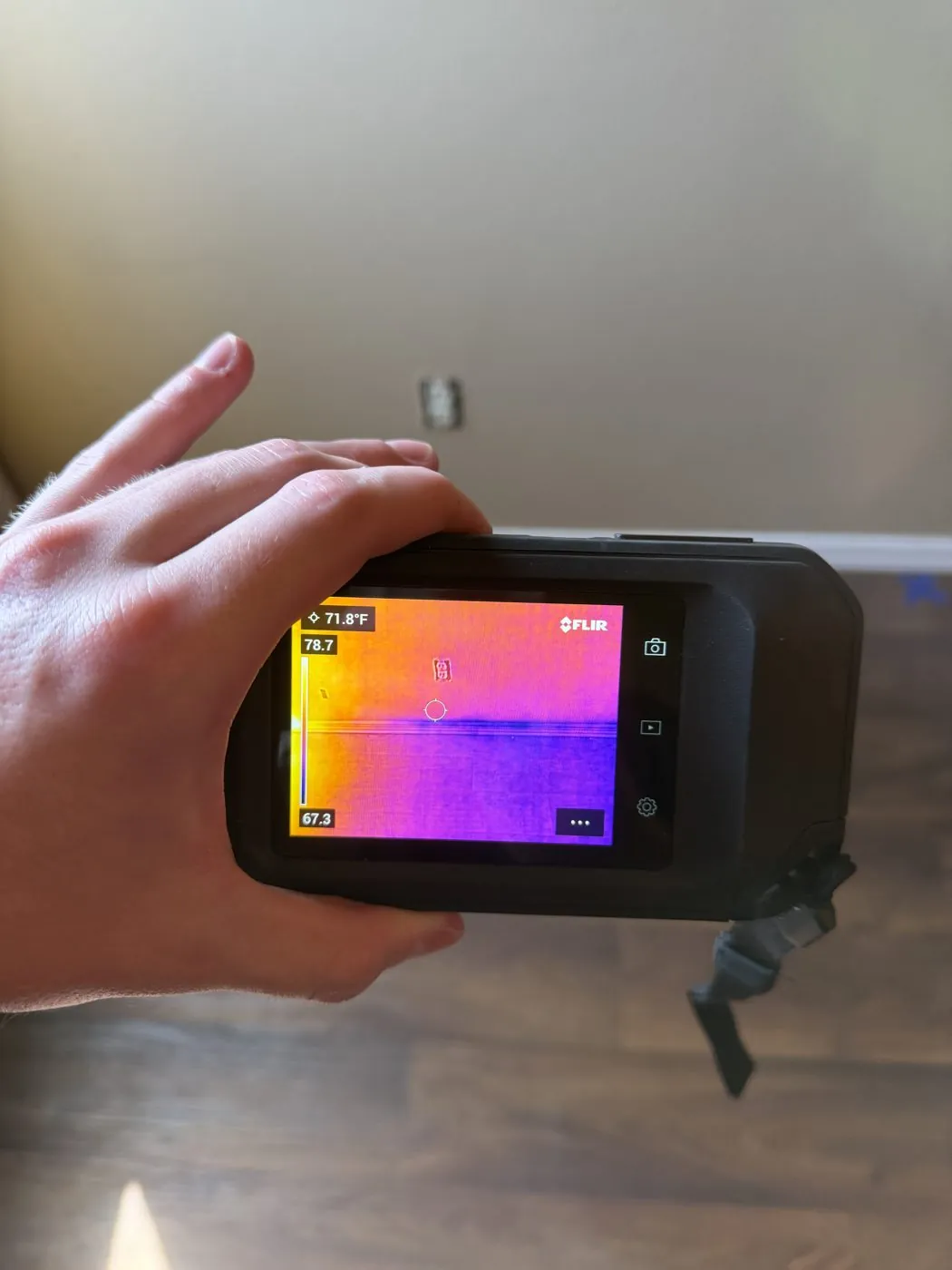
After taking readings, we separate what needs drying or removal from what is optional and what isn’t needed at all. If it’s minor, we’ll say so. If you don’t need us, we’ll tell you. Read more: Do I need restoration?

You can hire us for part of the job, for example drying only, while you handle other parts yourself or with someone else. We explain any trade-offs so the decision is informed.
What readings support this? What happens if I skip this item? How will we know the area is dry? How long will equipment run? A typical dry-out averages 4 to 7 days with daily monitoring, and the readings should show progress each day.
A bathroom sink overflows onto a tile floor and touches the hallway carpet. An assessment might find the tile area already dry and only the carpet edge elevated, and recommend drying that section rather than a larger job.
Yes. If it’s minor, we’ll tell you, and the assessment is free.
Yes. Partial scope is fine.
Yes, with no obligation.
For covered losses we bill insurance directly. Your adjuster and policy decide coverage.
918-486-2121. On weekdays, call the Coweta Public Works Authority at 918-486-8073.
Sometimes not. If the readings show the area is already drying on its own, we tell you that, and the visit stays free.
Yes. In newer homes we start at fittings and appliance lines. In homes from 1978 to 1995 we look for polybutylene supply lines, and in older homes we check original valves and drains.
Coweta is a growing Wagoner County community on SH-51, southeast of Broken Arrow. Not every water problem needs full restoration, and not every wall needs to come out. We show you the readings, explain what is necessary and what is optional, and you decide. Partial scope is always on the table.
Water in Coweta is handled by the Coweta Public Works Authority, at 918-486-8073 from 8 a.m. to 5 p.m. on weekdays. To report a water leak or wastewater issue after hours, call 918-486-2121, per the city's Public Works Authority page.
Coweta homes along SH-51 are mostly on slabs, so a sink or toilet leak spreads under the flooring before you see it. Once the leak is fixed, our readings show exactly how far it went.
The City of Coweta's own planning data says about 33% of its homes were built since 2000, nearly 28% in the 1980s and 1990s, and about 22% in the 1970s (city housing data).
Each era fails a little differently. Newer homes mostly leak at PEX fittings, ice-maker lines and washer hoses. Homes from 1978 to 1995 may still have gray polybutylene supply lines, a known failure point. 1970s homes are at the age for original water heaters, shutoff valves and drain lines to give out. When you call, telling us roughly when your house was built helps us know where to look first.
Every job story shows what we found, the readings and how the drying went. Coweta homeowners can see exactly how we work.
Each city page covers a different water-damage question. Phones are answered 24/7 for all of them, and the assessment is free at any distance. Not listed? We cover roughly a 75-mile radius around Tulsa; see the full service area.
Tell us how to reach you and we'll call you back to talk through what happened, and whether you actually need restoration.
Water actively coming in? Don't wait on a form. Call now, phones are answered 24/7.
(918) 550-2555