Bartlesville services · what's different here
Bartlesville flood questions extend beyond the Caney River
Water damage in Bartlesville: smaller creeks belong in the conversation
Bartlesville water damage is not only a Caney River question. The city's published floodplain map also identifies Turkey Creek, Rice Creek and other tributaries. A home can have a creek-related drainage concern without sitting beside the main river. The map is useful background, but its publication date matters; use current official mapping for a decision about an individual parcel.
When water reaches a building, explain whether it arrived from an outdoor low point or started at an indoor appliance or fixture. We assess what became wet rather than infer the source from the nearest blue line on a map. An upstairs leak, a backed-up drainage area and rising creek water can leave very different cleanup needs. Clear source information helps keep the proposed drying work tied to the actual damage. Learn more about water damage restoration.
Storm damage in Bartlesville: the 1986 flood is a warning, not a forecast
The NWS account of the 1986 Oklahoma flood explains that saturated ground was followed by heavy rain fed partly by moisture from Hurricane Paine. About half of the roughly 30,000 people evacuated across the affected towns were in Bartlesville. That is historical evidence of a serious local flood, not a prediction that today's storm will follow the same path or affect the same homes.
For a current event, follow official warnings and access restrictions rather than comparing water to a remembered storm. After safe access is restored, note whether water entered repeatedly or only once. We assess interior wet areas and help separate the drying question from roof, creek or drainage repairs. Tell us about any interruption in power or access, because that helps explain what happened between the first entry of water and the assessment. Learn more about storm damage.
Mold after water damage in Bartlesville: a flood map does not measure indoor dampness
Bartlesville explains on its flood-information page that a so-called 100-year flood means a one-percent chance in any given year, not one flood every century. A long quiet period therefore does not establish that a property cannot flood. Equally, a mapped flood risk does not establish that mold exists inside. The mold question starts after water reaches materials and those materials remain wet.
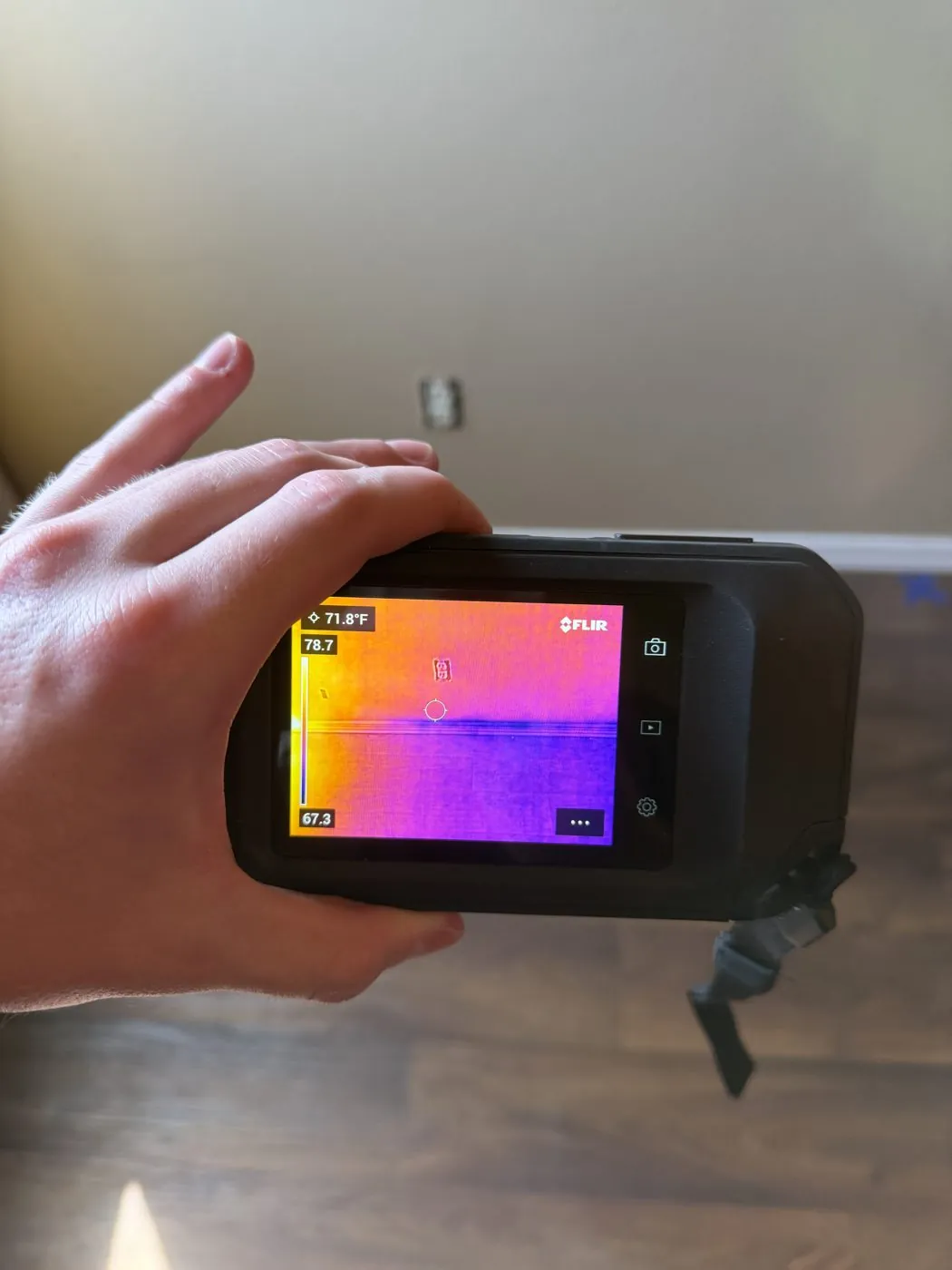
We assess the loss and test moisture conditions before recommending anything. Tell us which floor coverings, wall finishes or stored items were wetted, and which were removed before we arrived. If dampness is suspected behind a finished surface, the recommendation should follow evidence from that part of the building. Neither a reassuring street view nor an alarming flood-map color replaces an assessment of the affected rooms. Learn more about mold remediation.
Fire and smoke damage in Bartlesville: keep emergency response separate from cleanup
Bartlesville's official fire department page lists four city stations and a fire-prevention education program. Those public services do not establish the condition of a home after an incident. Only enter when the responsible authorities allow it, and do not treat a lack of visible flames as evidence that utilities or building materials are safe.
Water used to put out a fire needs drying too. When reviewing the damage, record where that water went as well as which rooms have smoke residue. A cleanup discussion should account for both, rather than focus only on the darkest wall or ceiling. For an overview of the issues that may need assessment, see fire and smoke damage.
Does Bartlesville's '100-year flood' wording mean a flood can only happen once per century?
No; the city explains that it means a one-percent chance of that flood in any given year.