Project at a glance
The job details
- LocationBroken Arrow, Oklahoma
- ServiceResidential water mitigation
- Contents workOctober 5, 2026
- Equipment pickupOctober 9, 2026
- Final cleanupOctober 21, 2026
- Marked completedOctober 21, 2026
A full day of packing before the drying began
Our crew spent October 5 from mid-morning to late afternoon on contents. We broke down two bed frames and moved the beds and a dresser into the garage. We packed the full-height cabinets, a bedroom and a bathroom. Then we pulled the wet carpet and pad from the bedroom and closet. Moving beds and a dresser out of a bedroom takes time, but it keeps furniture off wet flooring and gives the drying equipment room to work. The next day we packed the glass pieces stored on top of the tall cabinets, so nothing fragile was left near the work areas.
We also set trash cans in a bathroom closet so the dehumidifiers could drain without anyone having to empty them.
Drying the affected spaces and protecting the work areas
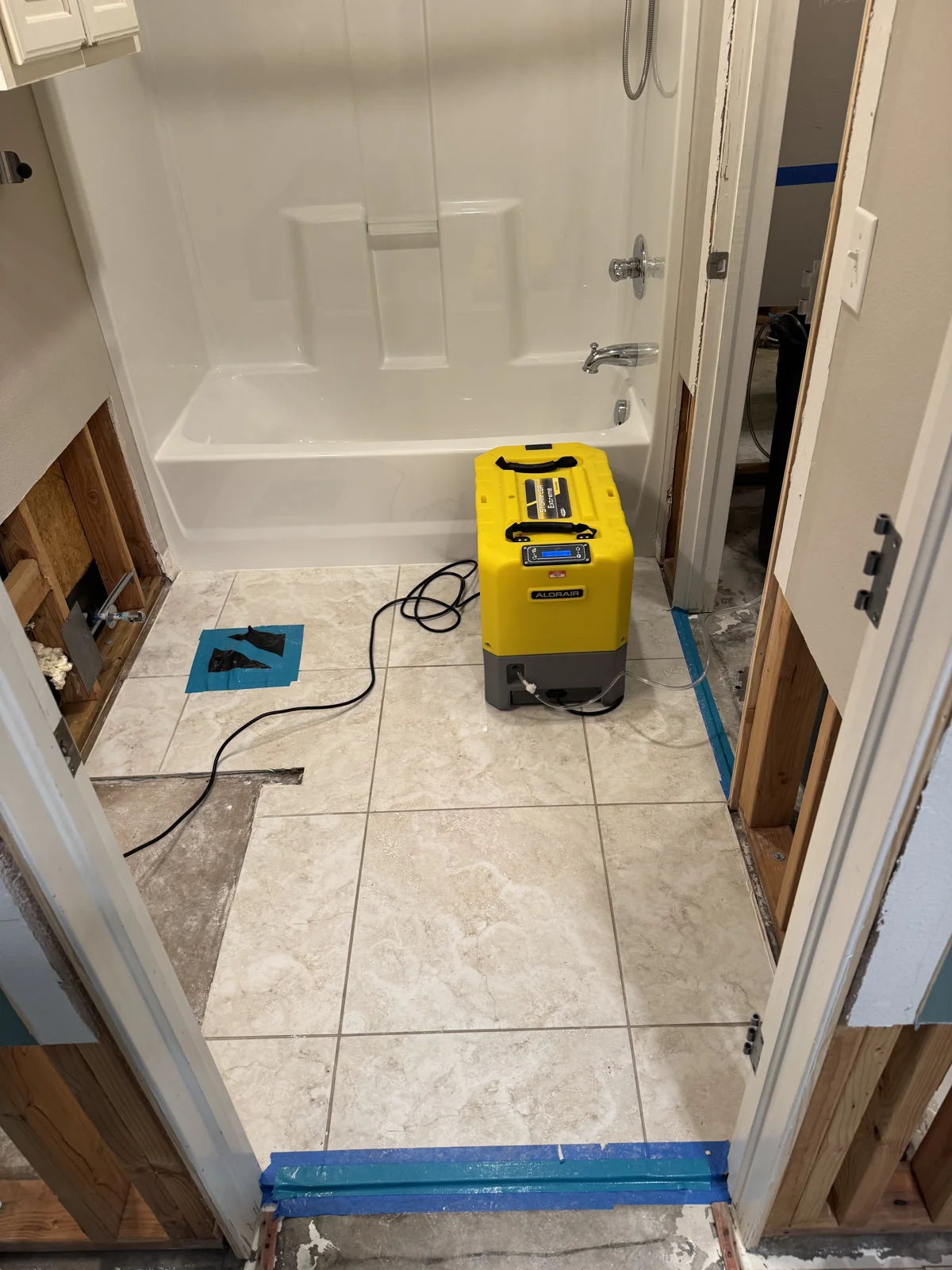
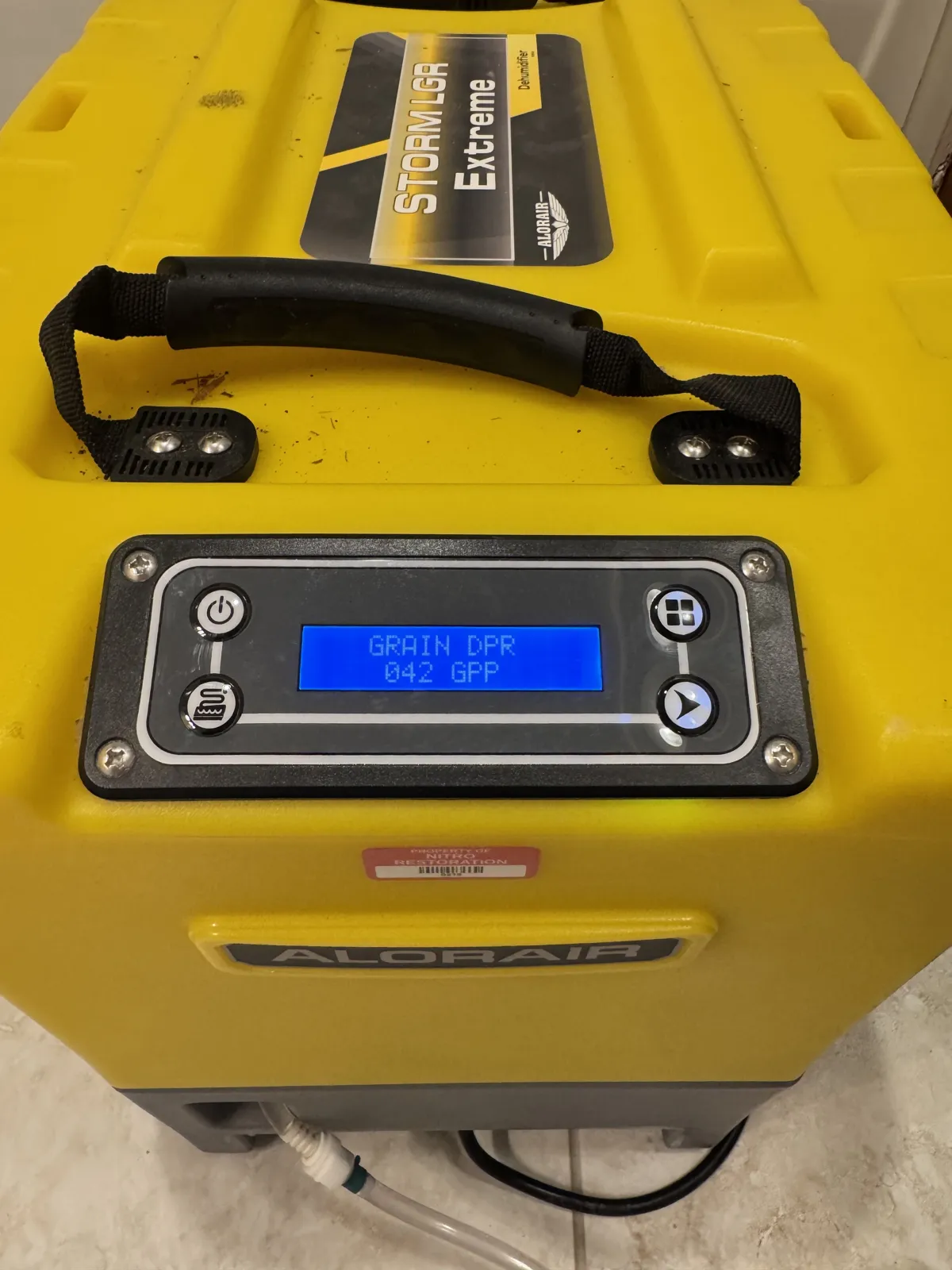
Two bathrooms were set up with dehumidifiers, and an air scrubber was placed in a bedroom. The bathroom photograph below shows one of those drying setups while the project was underway.
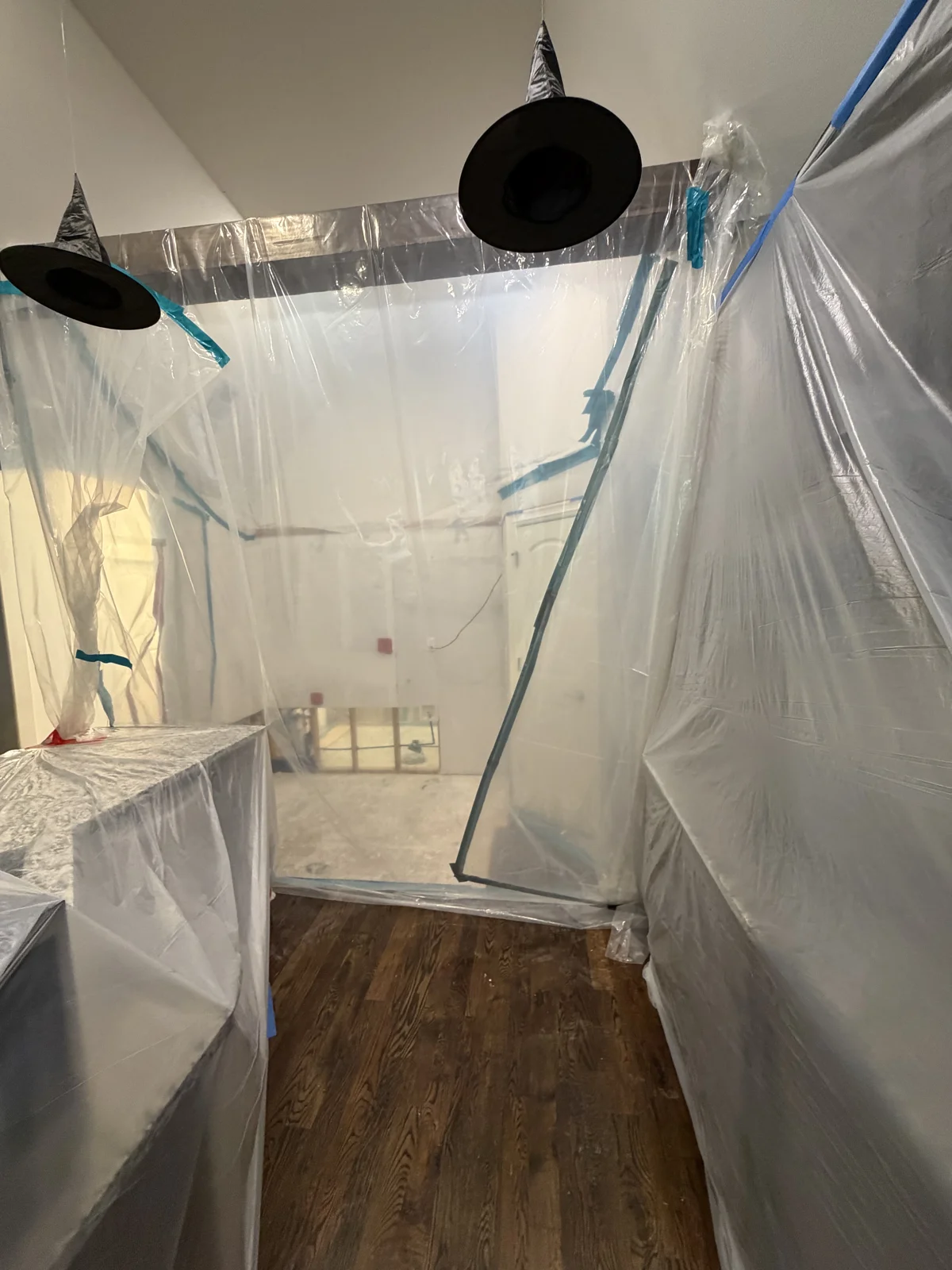
In the kitchen, plastic protection surrounded the work area and covered surfaces. The October 13 photograph shows that setup, and further work was documented on October 15. Drying equipment pickup was behind us, but the project was still moving toward final cleanup.
We came back for check-ups on October 6 and 7 and read the dehumidifier displays each time to track how the drying was going.
Protecting the rooms that weren’t wet
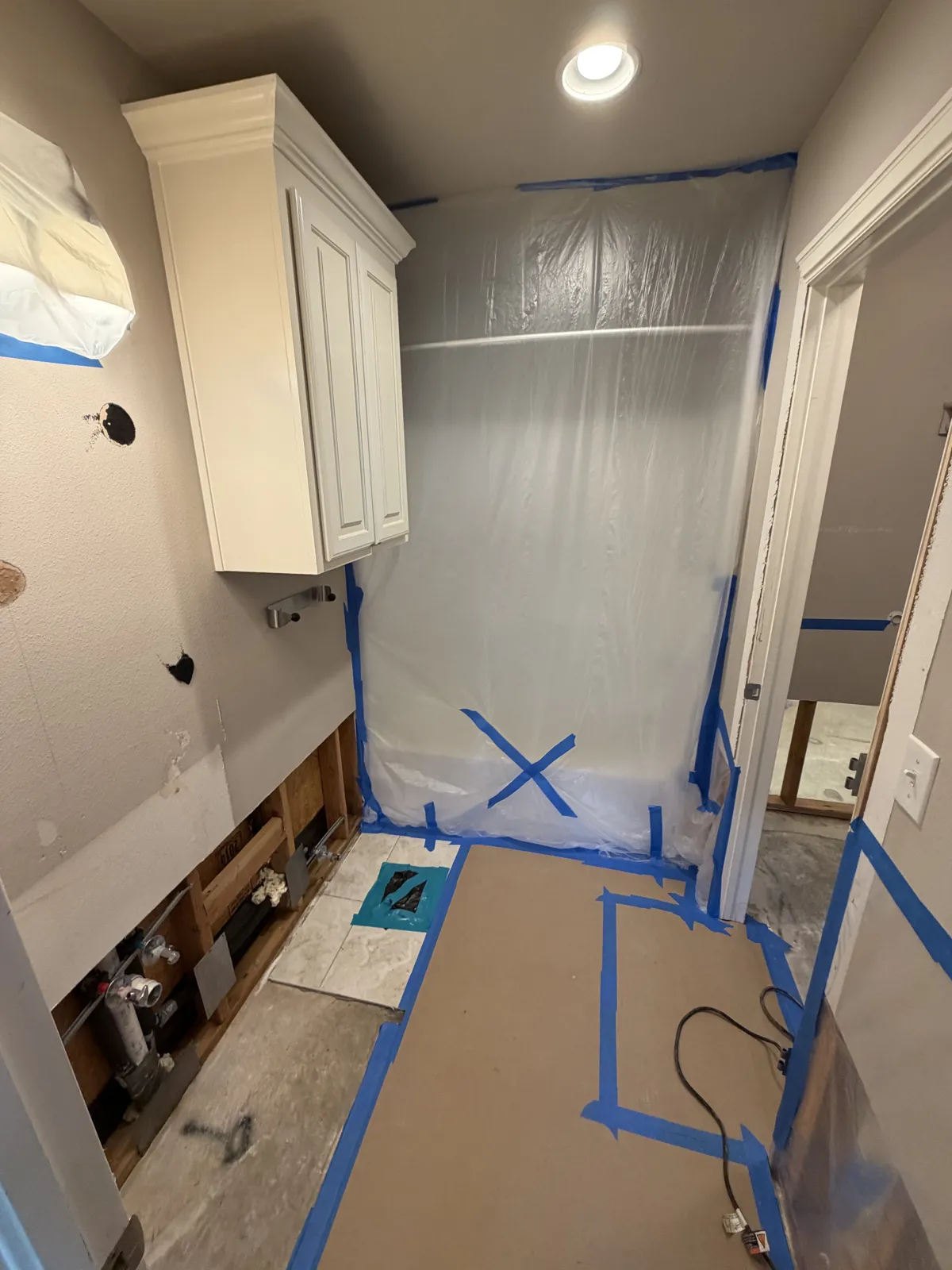
A lot of this job was about the parts of the house that stayed dry. We taped heavy paper protection over the floors along the hallways and walkways the crew used, and we hung plastic containment with zipper doors at the work areas. That way dust and debris stayed where the work was happening and didn't spread through the rest of the home.
On the final visit we made a point of leaving the kitchen working. After all the containment came down, one extension cord stayed plugged in so the refrigerator kept running. It's a small detail, but it matters to the family living there.
Equipment pickup wasn't the final visit
The drying equipment was picked up on October 9, but the project still had later work and cleanup ahead of it. On October 21, our crew removed the containment and cleaned up. The project was marked completed that day.
For this home, the job included both the dry-out and the practical work around it: moving belongings, protecting areas during the work and taking that protection down at closeout. If you're unsure what a water loss at your property needs, we offer a free assessment.
Between the October 9 pickup and the final cleanup, the containment and floor protection stayed up while later work went on in the kitchen on October 13 and 15.
Common question
What's the difference between mitigation and restoration?
Mitigation is the emergency steps you take to stop further damage: moving furniture out of the wet area, pulling back carpet and wet pad, cutting drywall to get saturated insulation away from the framing so it doesn't mold. Restoration is the whole process. It includes mitigation plus putting the house back together: drywall, paint, carpet, back to its original condition.