Project at a glance
The job details
- LocationCollinsville, Oklahoma
- ServiceResidential water mitigation
- Equipment setupOctober 16, 2026
- Final equipment pickupOctober 21, 2026
- Marked completedOctober 21, 2026
Four techs and a room to clear
Before any drying equipment could go in, the room had to be cleared. On October 16, four of our techs spent more than two hours moving a desk, a bookshelf and two dressers out of the office, then packing everything from the office, the office closet and the bathroom into boxes. The equipment setup was finished after hours that same day, so the drying could start right away.
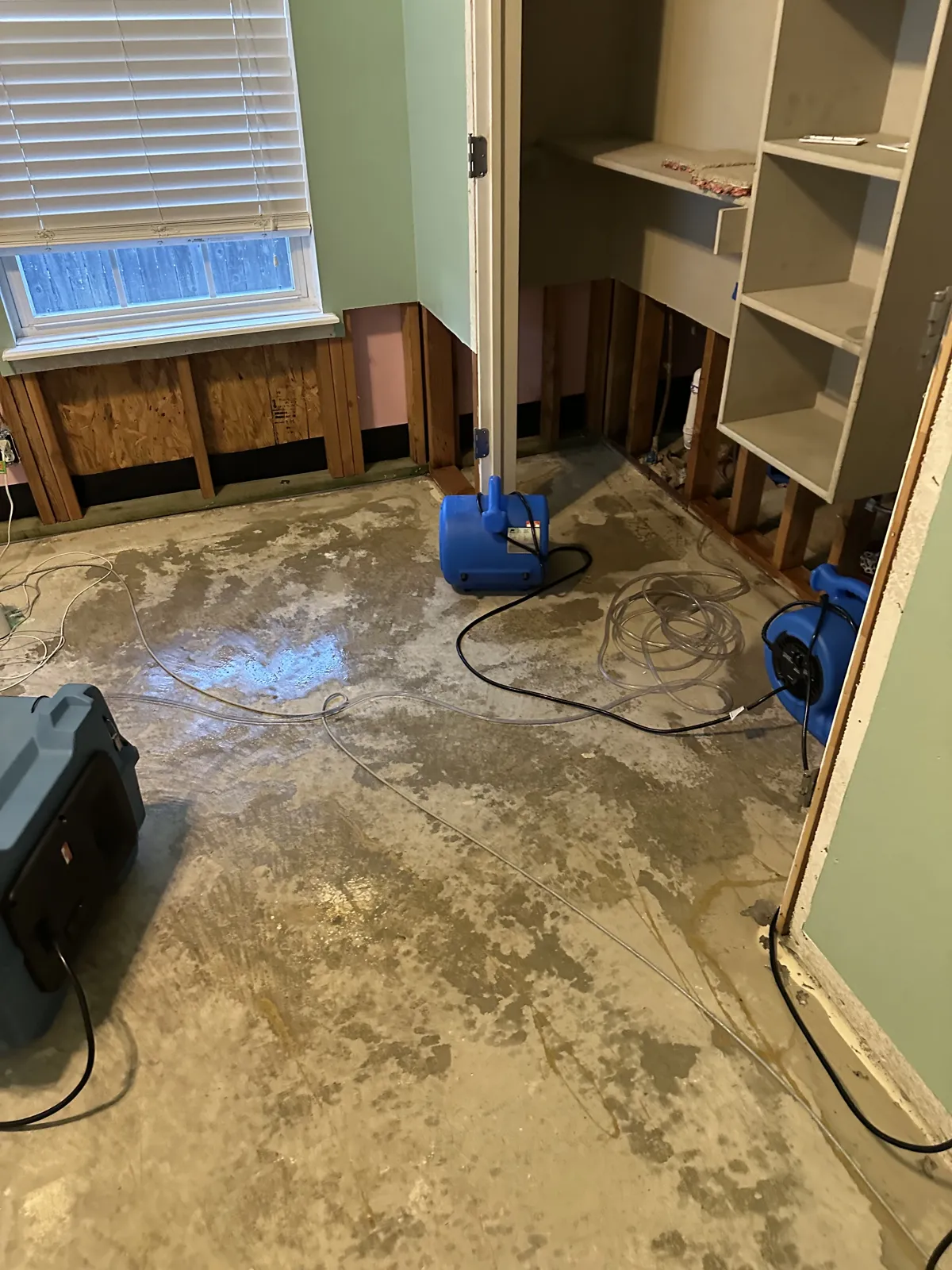
The setup was sized room by room: five air movers, a large dehumidifier and an air scrubber in the office, one air mover in the closet, and four air movers with a second large dehumidifier in the bathroom.
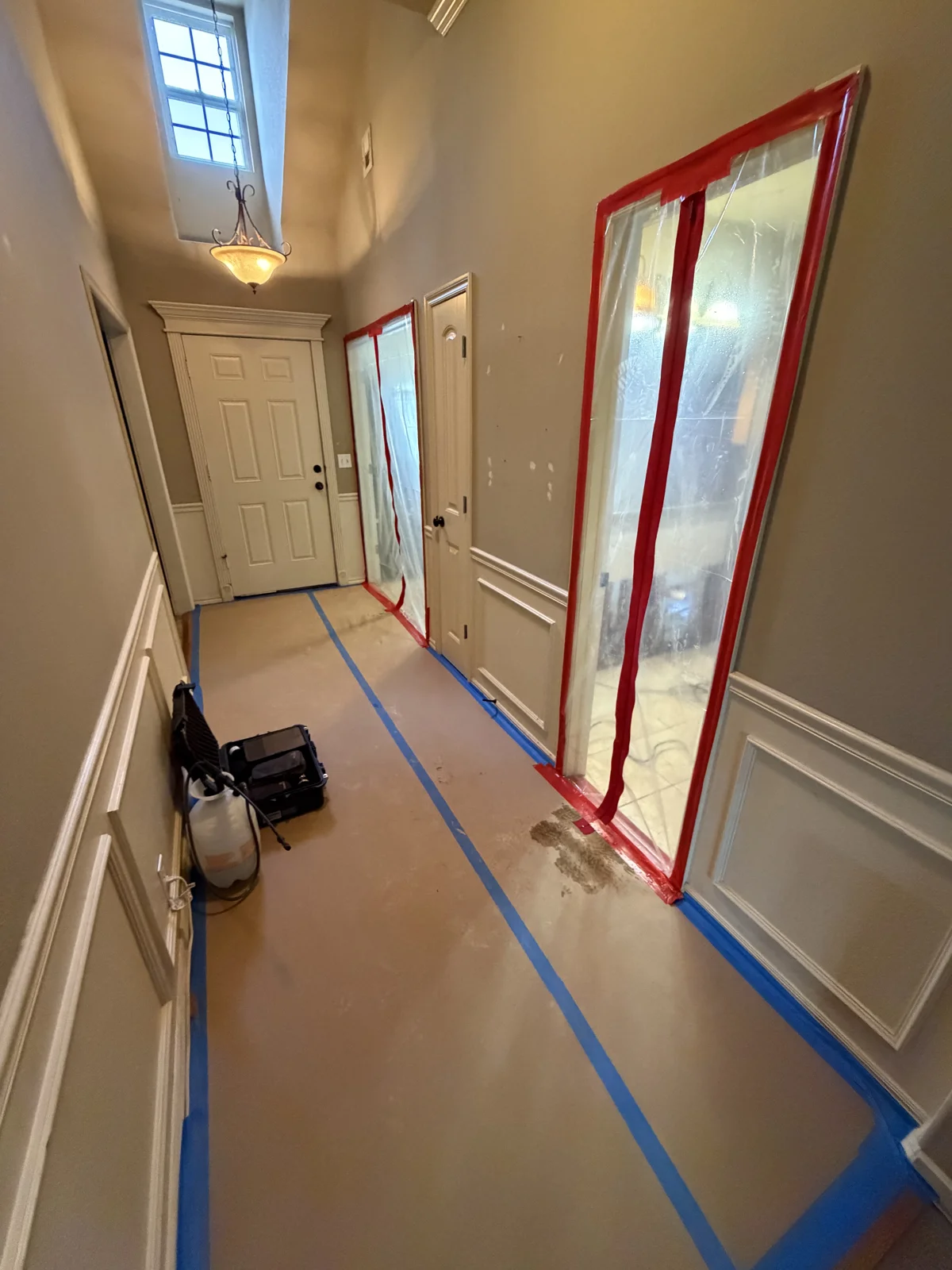
We laid floor protection along the hallway and set plastic barriers at the work-area entrances. The October 16 photograph shows the protected route into the rooms, with the work areas separated from the hallway.
Checking in while it dried
We came back on October 18 to check progress, with the air movers still running along the opened lower walls of the office. Visits like this are how we decide when equipment can come out. We go by the readings, not by a set number of days.
The dry-out didn't end everywhere at once
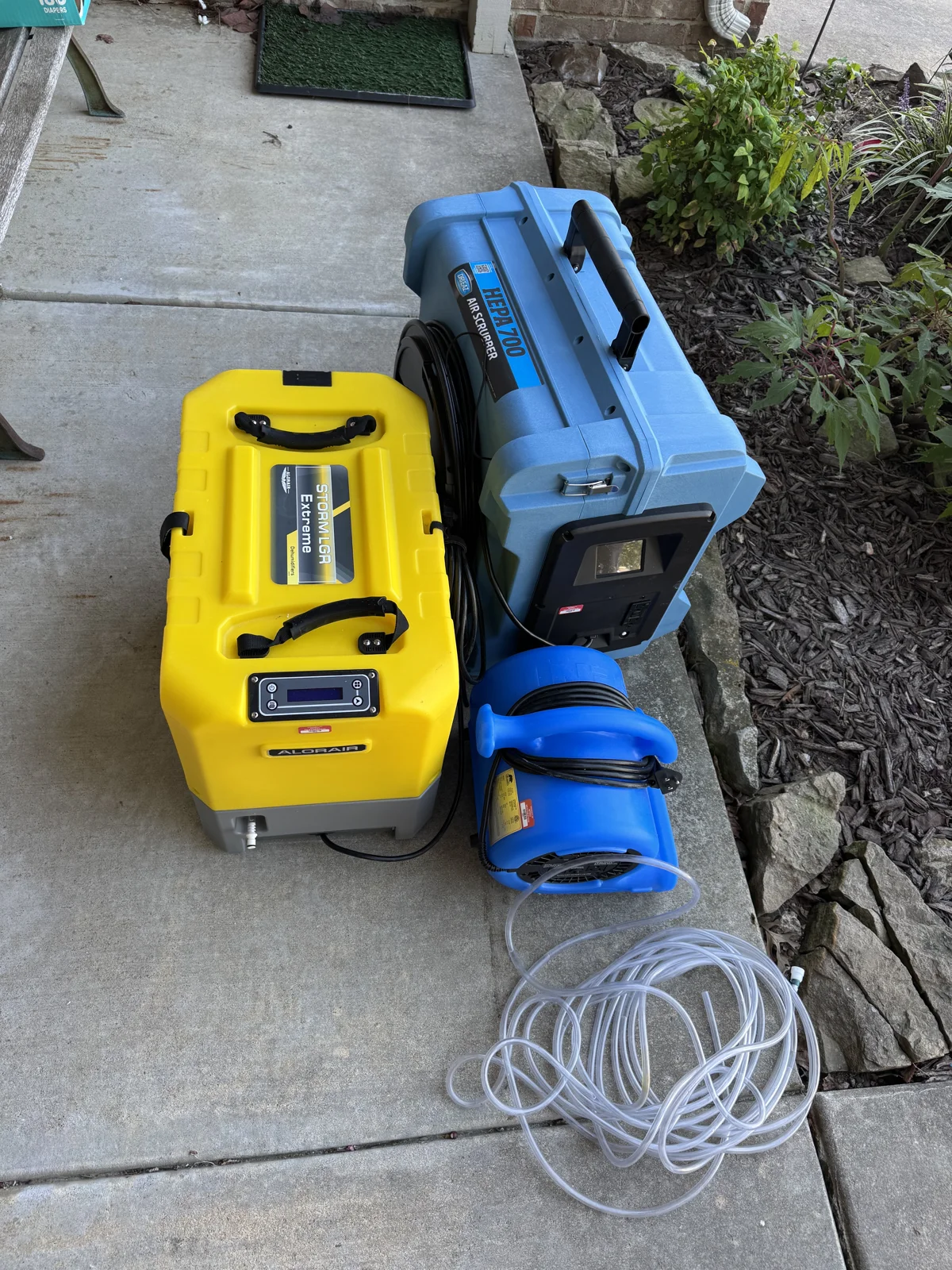
Air movers and dehumidifiers were set in the office, closet and bathroom, with an air scrubber in the office. When we returned on October 20, the crew was able to remove most of the drying equipment.
One moisture point was still showing wet. Rather than take everything away, we left a dehumidifier, an air mover and the air scrubber in the office. The remaining setup stayed in place until the following day's final pickup.
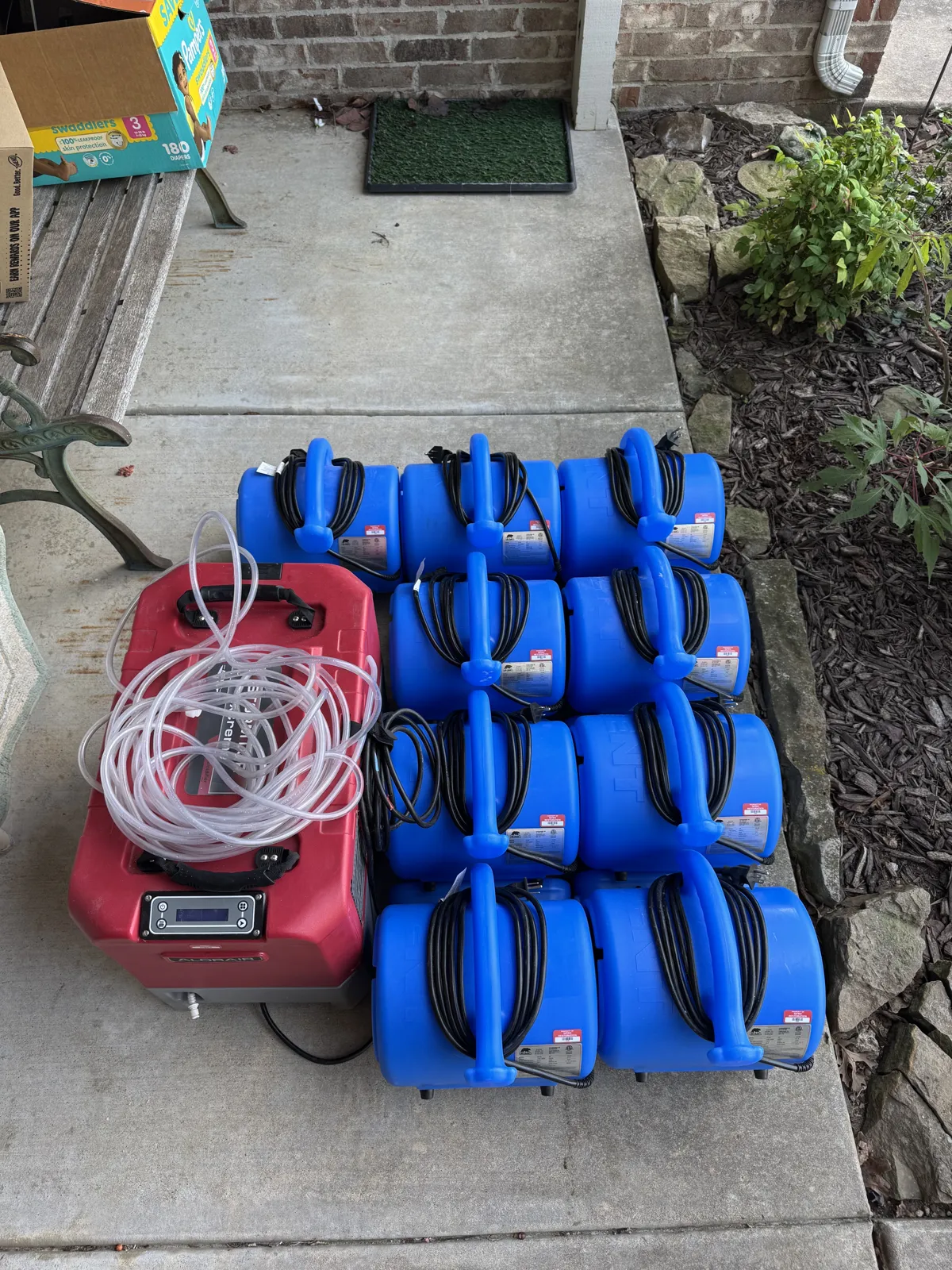
When the crew picked up most of the equipment on October 20, the air movers were staged outside before loading so nothing was dragged through the protected hallway.
A final check before the last equipment came out
On October 21, the crew recorded that all moisture points had dried to standard and removed the remaining equipment. No equipment was left at the property, and the project was marked completed that evening.
That last visit is an important part of this Collinsville job story. The pickup followed the moisture checks rather than treating every room as ready at the same moment. The photos below show the protected hallway and equipment from the project.
Documented from the first visit to the last
This loss went through the homeowner's insurance, so every visit was documented. We took photos of the walkthrough, the protected work areas, the drying setup, the check-up and both pickups, and we logged labor and readings along the way. That record shows what was wet, what we did about it, and when each room met the drying standard. It answers the questions an adjuster asks without the homeowner having to piece it together.
From setup to the last piece of equipment leaving, the dry-out took five days. That's in line with the four to seven days most homes need.
Common question
How long does your equipment usually stay in my home?
It takes the same amount of time as drying a house. The equipment is what does the drying after wet materials have been removed, so around 4 to 7 days.