Where your shutoff really is, why you need a water key, what to do in the first hour, and why there is rarely just one break.
This guide comes straight from what our owners see on real Tulsa-area water damage jobs, in plain words, so you know exactly what to do before and after it happens.
In warmer states like Florida or Arizona, the main water shutoff usually sits right outside by the front door. In Oklahoma it can't go outside, because it would freeze too. So it often ends up hidden in a closet, behind a panel, or somewhere the homeowner has never looked.
And even when you find it, many homes still have old gate valves that have been open for years. They are not frozen with ice; they are frozen with corrosion. You turn the handle and nothing happens.
A water key (also called a meter key or curb key) is a long T-shaped metal tool that reaches down into the meter box and turns the shutoff valve. You buy one yourself. They are sold at most hardware and home-improvement stores, and a basic one is inexpensive. Your water company usually will not hand you one, so it is worth picking up before winter. Some utilities also ask to be called when the meter valve is used, so check with yours.
Most homeowners don't own one or don't know where it is. When a pipe bursts, they lose precious minutes searching, and many end up calling the fire department just to stop the water. Every minute the water runs, it spreads further into walls, cabinets and floors.
Buy a water key at a hardware or home-improvement store before winter, not during the freeze when everyone needs one.
Locate the meter box near the street, usually under a lid in the yard or at the curb. Clear anything covering it.
Make sure you can open the lid and turn the valve. Keep the key in the garage or by the door where anyone in the house can grab it.
Inside the meter there's a small dial that spins whenever water is moving. You'll use it after any repair.
Try your main shutoff first. If it is hidden or the valve won't turn, go to the meter with your water key.
If water is near outlets, fixtures or appliances, shut off power to that area only if you can reach the breaker safely.
Stop the source so no more water comes in.
Take photos and video before you move or throw anything away. This helps your insurance claim.
Move furniture, rugs and valuables off wet floors.
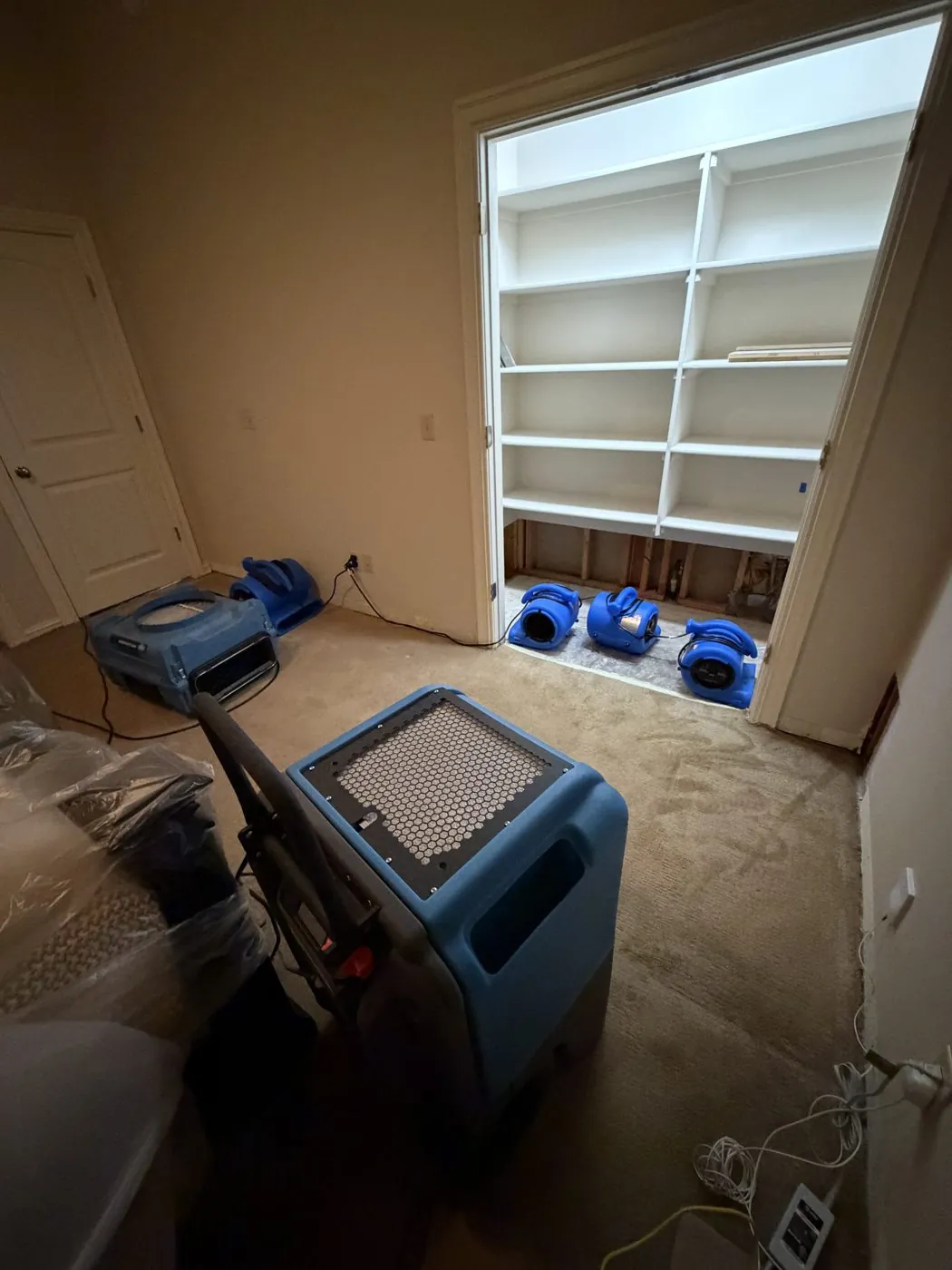
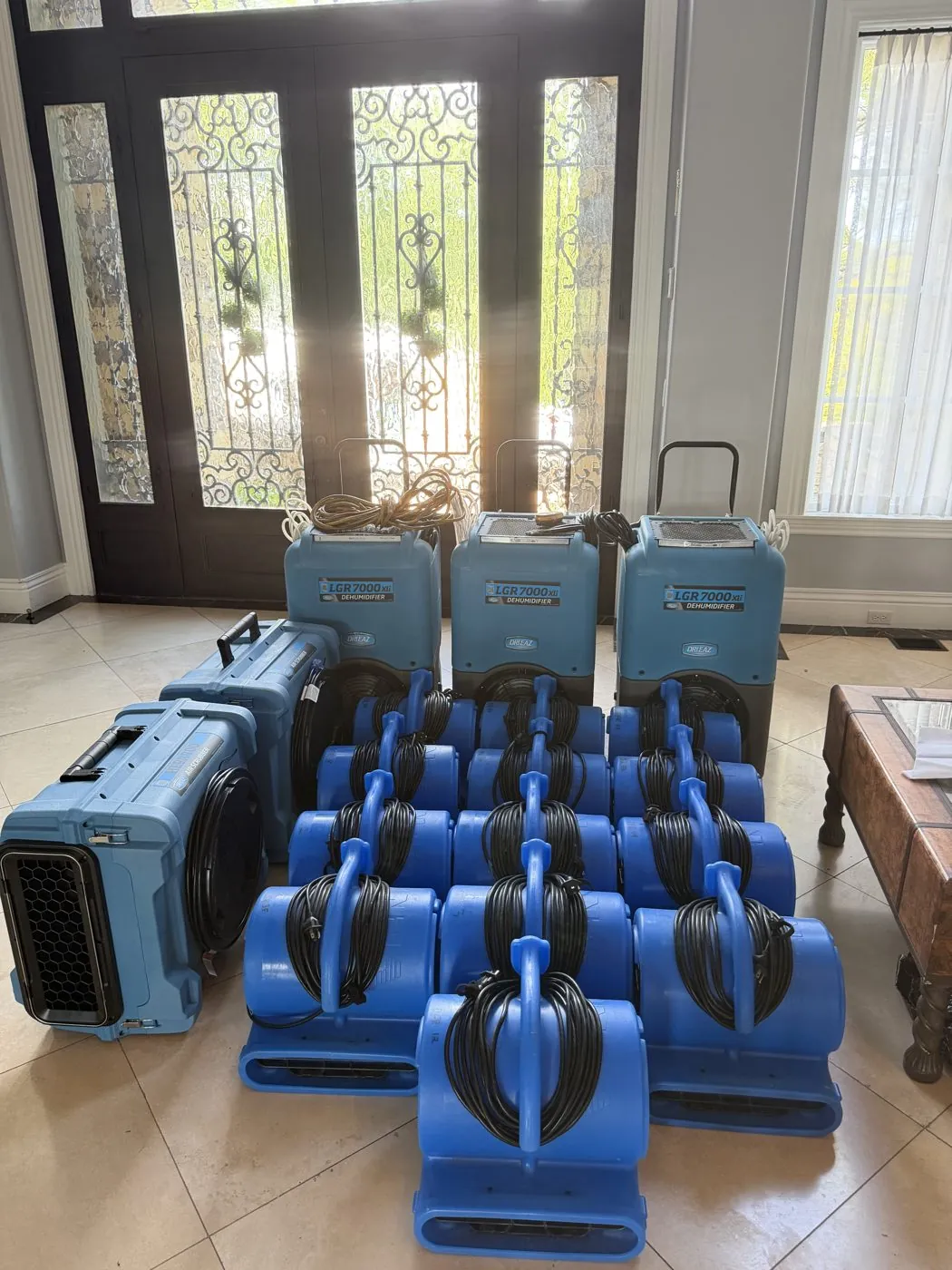
Drying should start right away, and the rest of the house needs to be checked for more breaks.
When pipes freeze, they often break in more than one place. A homeowner gets one leak fixed, thinks the problem is solved, and two or three hours later water shows up somewhere else.
Our owner once worked a Houston home with 33 separate frozen and broken areas; it took five days to locate every leak. Most homes are not that extreme, but the lesson holds: it's what you don't know about that does the damage.
Check your meter. After a repair, with every faucet and fixture off, look at the leak dial on your meter. If it's spinning, you still have a leak somewhere.

Plumbing packed into tight exterior wall spaces is the most common spot we see.
If a section of wall was left with air pockets during construction, that's where the freeze happens.
On a recent job in a house built in 1951, a sink supply line had ruptured. When we opened the walls there was no insulation at all, and evidence of earlier breaks. In homes like that, a hard freeze can get through no matter what you do.

Water from a burst pipe soaks into cabinets, wood floors, drywall and the spaces behind them. Left to dry on its own, wood floors warp and moisture stays trapped behind kitchen and bathroom cabinets where you can't see it. In cold weather it may seem fine, but once temperatures warm up, that trapped moisture can lead to microbial growth. Moisture readings are how you know it's actually dry.
A neighbor of our owner had a washing machine drain line come loose during dinner. He wiped up the tile and thought it was handled. The next day the carpet in his master closet was completely soaked; it had been sitting wet for about 24 hours. Water travels where you can't see it.

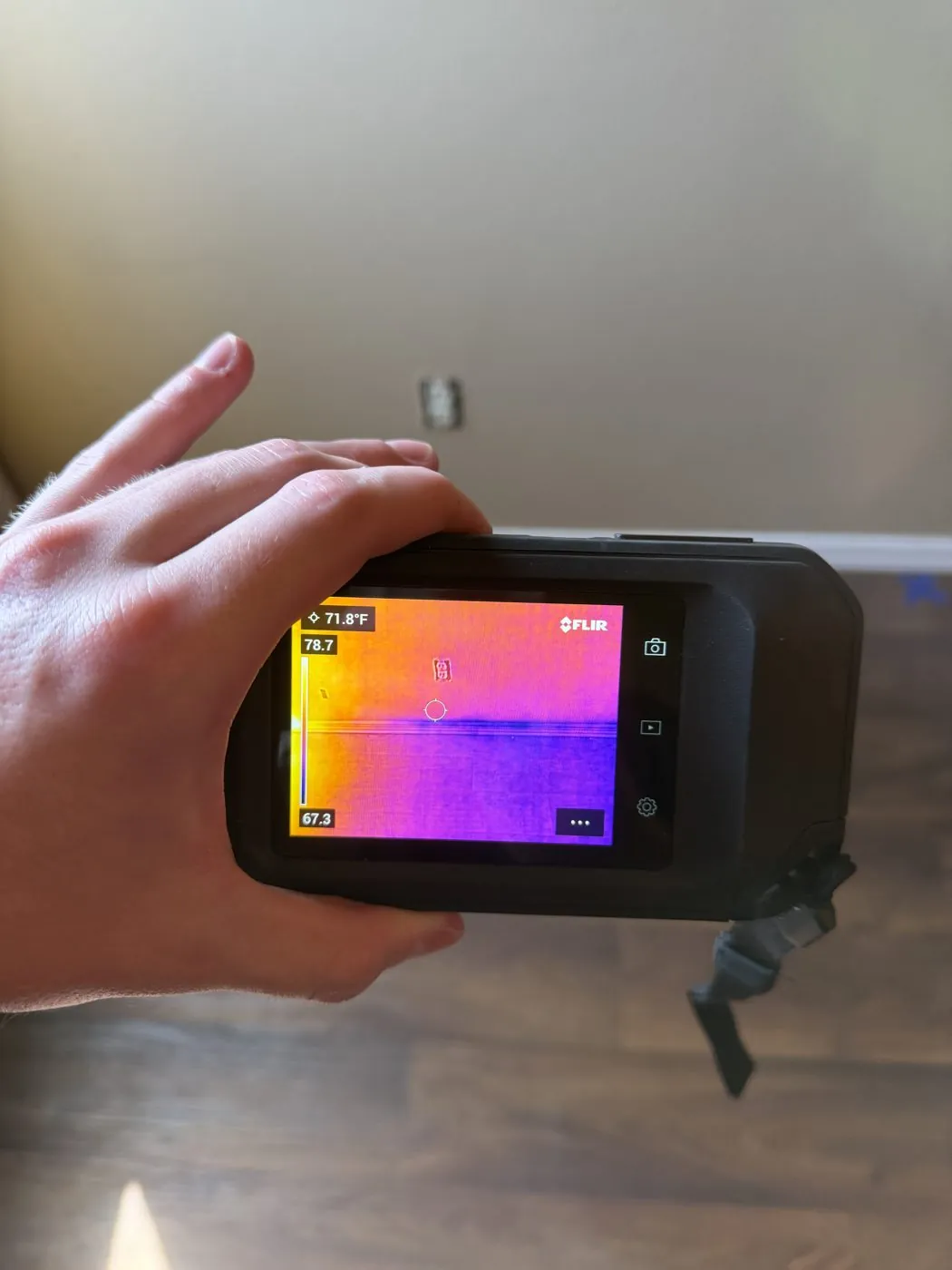
We don't just look at the spot you show us. We scan the whole house with thermal imaging and moisture meters to find leaks and wet areas that haven't shown up yet, then build a drying plan and document everything for your insurance company.
The inspection is free. No bait-and-switch, no surprise upsell. Recently a homeowner was worried about an old leak, so we checked the areas around it and showed him everything was fine. That peace of mind is the whole point.
Find it today and test that it turns.
Know where your meter is and practice turning the valve.
Know how to tell if water is still moving.
Keep an eye on them during hard freezes.
(918) 550-2555, answered 24/7, before you need it.
The pipe splits while the water inside is frozen. Nothing leaks until the ice melts, so most Oklahoma homeowners find the burst a day or two after the cold snap, when water is already moving through walls and floors.
A water key is a long T-shaped tool that turns the shutoff valve at your water meter by the street. In Oklahoma your indoor shutoff is often hidden or seized with corrosion, so the meter may be the only way to stop the water. Buy one before winter and keep it where you can grab it.
Not always. Frozen pipes often break in more than one place. With every fixture off, check the leak dial on your water meter; if it spins, water is still moving somewhere. We scan the whole house with thermal imaging for free.
Yes. No charge, no upsell. We scan for hidden moisture and show you the readings, and if nothing needs our equipment we tell you so.
Six things you can do right now, before anybody gets there.
The 6-point check the owners use, and why waiting makes it worse.
Smoke, soot and firefighting water, and how the cleanup actually runs.
Cost, insurance, timelines, and how we work.
Tell us how to reach you and we'll call you back to talk through what happened, and whether you actually need restoration.
Water actively coming in? Don't wait on a form. Call now, phones are answered 24/7.
(918) 550-2555